Detailed Explanation of Rule Changes
The 2024-2025 lawn and garden tractor pulling season introduces significant rule changes impacting engine specifications and weight/hitch height regulations. These modifications aim to create a more balanced and competitive environment. Let's examine these changes in detail. For regional event schedules, check out the Western NY pulls.
Carburetion: Standardized Pro Stock Carburetors
The most impactful change affects the Pro Stock class's carburetor specifications. Previously, competitors could extensively customize their carburetors, leading to significant performance discrepancies. The 2024-2025 rules introduce stricter standards for venturi size, butterfly valve design, and main jet sizing (the components controlling airflow and fuel mixture). While some minor adjustments, like standoff pipe addition or choke removal, remain permitted, extensive customization is no longer allowed. This standardization aims to level the playing field, potentially reducing performance disparities between competitors. The exact impact on horsepower remains uncertain, necessitating close observation of the upcoming season.
Pro V-Twin Class: Weight and Hitch Height Adjustments
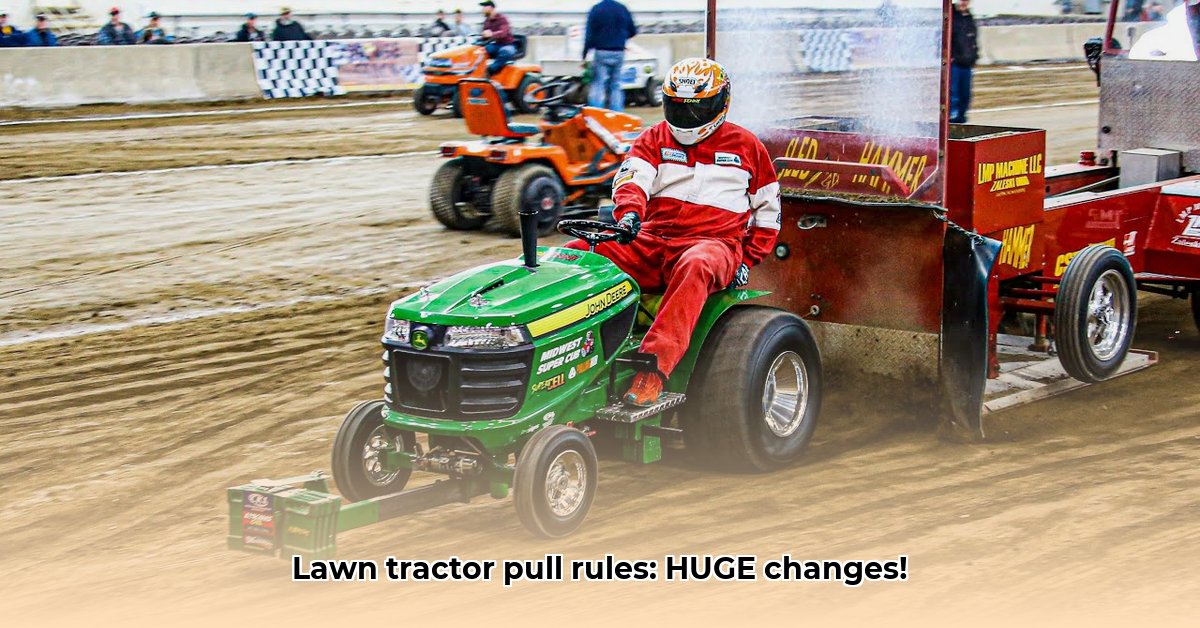
The Pro V-Twin class undergoes changes in both weight and hitch height regulations. A new "Heads-Up" division is introduced, mandating a fixed weight of 1050 pounds and a hitch height of 13 feet for all competitors. This creates a directly comparable environment, fostering head-to-head racing. The traditional Pro V-Twin class retains the same weight limit but allows for variable hitch height adjustment. This creates two distinct competitive formats: one focusing on standardized setups and the other on refined tuning through hitch height adjustments. The outcome of this dual-class system remains uncertain and is likely to reveal valuable insights into the influence of hitch height optimization.
Engine and Safety Regulations: Maintaining the Status Quo
Beyond carburetor and weight/hitch height adjustments, the fundamental engine regulations and safety protocols remain consistent. Commercially available V-twin lawn and garden tractor engines remain the standard, prohibiting custom-built engines. The "Hinkle Rule," limiting engine block protrusion, and mandatory track push-on procedures with an instant disqualification for unsafe starts, continue to enforce safety standards, prioritizing the well-being of competitors and the integrity of the competition.
Analysis of Potential Impacts
Predicting the precise impact of these rule changes is challenging due to a lack of pre-season performance data. However, logical deductions can illuminate potential consequences.
The standardized Pro Stock carburetors should theoretically reduce performance disparities, leading to closer racing. However, innovative tuning strategies focusing on other engine aspects may still emerge. In the Pro V-Twin class, the Heads-Up division's fixed parameters might yield unexpected performance outcomes, potentially revealing optimal setups for different engine configurations. The flexible hitch height in the traditional Pro V-Twin class will allow teams to experiment and likely lead to more refined tuning strategies. The overall effect of these changes will be observed over the course of the season. Data collection and analysis are critical for accurately assessing their impact.
Impact on Different Stakeholders
The rule changes will significantly affect several key stakeholders in the tractor pulling community.
Competitors: Competitors must adapt quickly, requiring significant time and resources for re-tuning and potentially engine modifications. Short-term adjustments are likely to be necessary, but long-term, creative solutions may emerge.
NGTPS Officials: Officials must effectively monitor the changes' impact, ensuring fair play and consistent enforcement. This requires diligent observation, data collection, and potential adjustments to inspection procedures.
Engine Manufacturers: Manufacturers must adapt their engine designs to the new regulations, which may lead to new model development and innovation in areas previously less emphasized.
Conclusion
The 2024-2025 lawn and garden tractor pulling season introduces substantial rule changes, particularly concerning carburetor specifications and weight/hitch height regulations. While the precise effects are yet unknown due to the absence of pre-season data, the changes aim to promote fairer competition and potentially more exciting racing. The upcoming season will provide valuable data for evaluating the effectiveness of these modifications, leading to potentially further refinements in future seasons. Active data collection and analysis are crucial for optimizing the rules and ensuring a dynamic and competitive pulling environment.
Risk Assessment
(Note: A detailed risk assessment matrix would be included here, detailing potential risks associated with the rule changes and mitigation strategies. This would involve considering risks for the competitors, officials, engine manufacturers, and spectators.)
Call to Action
We urge readers to actively follow the 2024-2025 season, gathering and sharing performance data to facilitate a comprehensive analysis of the rule changes' impact. This collaborative effort will contribute to continuous improvement within the National Garden Tractor Pulling Series (NGTPS), ensuring a fair, dynamic, and exciting competition for years to come.